17/02/2026
Company of the month”. : Kalaallit Nunaanni Brugseni – Brugseni.gl
Kalaallit Nunaanni Brugseni (KNB) is much more than a supermarket chain – it is a member-owned organization that has bee...
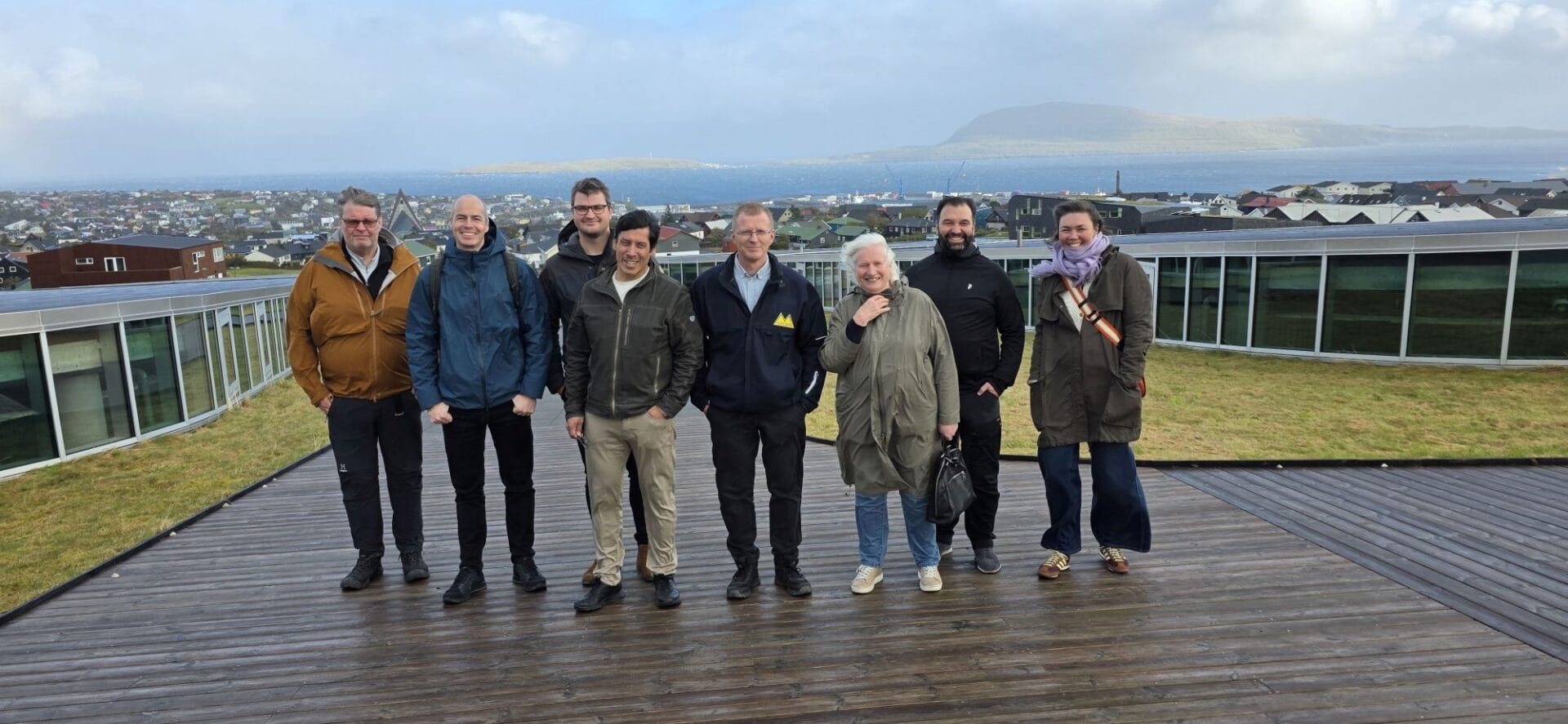
In October, the Committee for Consulting Engineers and Technical Advisers took the opportunity to carry out a long-awaited study trip to the Faroe Islands. Seats had become available on a direct flight from Nuuk to Tórshavn in connection with a visit to Nuuk by a large Faroese business delegation. Other members of the consulting industry were naturally invited to join, and eight participants set off on an inspiring and educational journey consisting of three intensive days in the Faroe Islands, followed by a day of meetings in Copenhagen.
The trip exceeded the committee's expectations. It provided professional inspiration, fresh perspectives, valuable connections and a unique insight into the developments shaping Faroese society.
Special thanks go to the Faroese industry association for consulting engineers and technical advisers for providing an exceptionally warm welcome. Particular appreciation goes to committee chair Árni Jacobsen, who generously dedicated all three days to accompanying the group, acting as both host and guide.
Throughout the visit, architects, engineers, contractors, executives, developers and operations managers were ready to share their experiences and proudly present their projects, achievements and country. Their personal commitment and outstanding hospitality left a lasting impression on all participants.
The programme clearly demonstrated how the Faroe Islands, through strategic investments, have developed modern solutions in infrastructure, construction and business development, combining outstanding engineering, high-quality architecture and artistic elements.
In Skála, participants gained insight into the development of the Faroe Islands' first dry dock. The construction project reflects significant ambitions in maritime infrastructure and advanced engineering.
The visit to Eysturoyartunnilin offered a fascinating insight into one of the Faroe Islands' most significant infrastructure projects. This impressive tunnel, featuring the world's only underwater roundabout, has become a symbol of the Faroese determination and ability to connect communities through ambitious infrastructure development. In one of the tunnel's side passages, participants were given a detailed introduction to the planning, design and construction of the project.
At BORG A/S, participants experienced how even a building supplies business can become an architectural landmark. The building combines modern commercial architecture with references to Faroese culture and history, demonstrating how architecture can create a distinctive identity far beyond a building's practical function.
In Klaksvík, Hotel KG provided an example of how modern architecture can contribute to shaping and developing a town's identity.
The group also had the opportunity to experience one of the Faroe Islands' most important export industries at close range during a visit to Bakkafrost's aquaculture facility in Strond. Here, participants were introduced to a high-tech production operation where advanced technology and many years of experience work hand in hand, supporting one of the country's greatest industrial success stories.
The programme also included visits to several prominent public buildings in Tórshavn.
At the newly extended swimming pool complex, participants received an overview of the project's development, as well as the architectural and technical solutions behind its construction.
At Glasir, an educational institution offering both upper secondary and vocational education, participants gained insight into modern learning environments and one of the Faroe Islands' most remarkable educational buildings.
The primary and lower secondary school á Fløtum made a particularly strong impression. With an architectural concept inspired by islands connected to form a unified whole, the school has become a striking landmark of modern Faroese construction.
The project was developed using strong local expertise in architecture, engineering consultancy, project management and construction. It reflects the professional pride and high standards that characterise the Faroese construction industry.
A central part of the trip was the meeting with the Faroese sister organisation. The discussions confirmed that the consulting industries in Greenland and the Faroe Islands face many of the same opportunities and challenges.
There was broad agreement on the potential benefits of closer cooperation between the two industry associations. Both sectors operate in small societies where sharing experiences, building networks and exchanging professional knowledge can create significant value.
Throughout the trip, it became increasingly clear how much Greenland and the Faroe Islands have in common. In many areas, the two societies share similar conditions, challenges and opportunities.
The Faroese part of the journey concluded with a special guided tour of the historic government buildings in Tórshavn. It was a memorable and atmospheric ending to several intensive days filled with professional experiences, new relationships and inspiration.
The journey continued in Copenhagen with visits to both DI Byggeri (DI Construction) and the Danish Association of Consulting Engineers (FRI) at the House of Industry.
Discussions focused on experiences with contractual frameworks in the construction industry, building regulations and the opportunities associated with anticipated defence investments in Greenland.
Both meetings provided valuable professional insights and a stronger foundation for future cooperation.
The study trip was, of course, about gaining inspiration, but equally about translating new experiences into concrete ideas and development opportunities back home in Greenland. This is precisely why the trip was such a success.
Participants returned home with fresh ideas, stronger professional networks and an even better foundation for developing the consulting industry in Greenland. At the same time, new relationships were established across the North Atlantic, creating opportunities for future cooperation and shared solutions.
The trip left a lasting impression on everyone involved. This was not only because of the impressive projects and buildings, but also because of the people who welcomed us, the professional discussions and the inspiration brought back to Greenland.
The journey demonstrated that although the Atlantic Ocean separates Greenland and the Faroe Islands geographically, our societies remain closely connected, both professionally and personally.