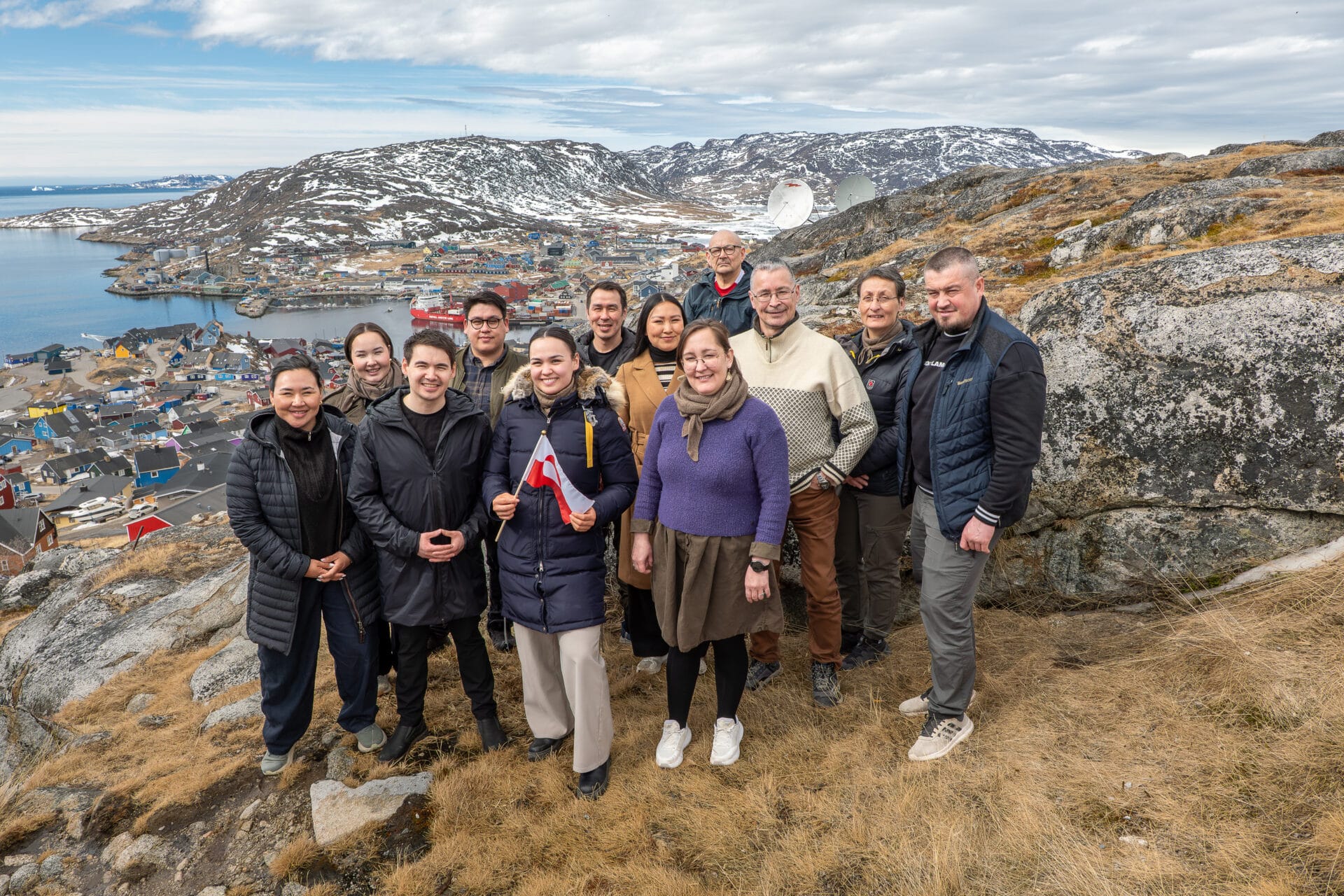
Innovation South Greenland (ISG) was established in 2019 by Kommune Kujalleq with a clear mission: to strengthen business development across the entire region. Since then, the organisation has grown significantly and now also operates the Agricultural Advisory Service, Visit South Greenland, and the UNESCO World Heritage site Kujataa. Today, ISG serves as a vital link between the municipality, the business community, and other stakeholders, with a particular focus on supporting and developing industries that require guidance and assistance.
The organisation employs 12 full-time staff throughout the year, supplemented by seasonal employees and interns during the summer months. Behind these job titles is a diverse range of expertise, including business development advisors, a communications officer, consultants specialising in agriculture, finance, machinery and buildings, a UNESCO Site Manager, and a Park Ranger. Collectively, the employees have lived in the region for a total of 345 years. According to the organisation, this strong local knowledge and commitment is one of its greatest strengths.
ISG sees several promising opportunities for South Greenland. The opening of additional airports is creating new possibilities to extend the tourism season, benefiting aviation, accommodation providers, and tourism experiences alike. At the same time, there is considerable untapped potential for greater self-sufficiency, where strong local traditions and expertise can be transformed into sustainable businesses. Mining is also becoming an increasingly important industry, creating new opportunities for local companies in areas such as logistics and support services. As the organisation puts it: "Large projects move money. Small projects move people."
For entrepreneurs and businesses in the region, the greatest challenges are capacity, skills, and access to capital. Several towns face a shortage of available land and the necessary permits for establishing businesses in urban centres. There is also a growing need for both highly educated professionals and skilled tradespeople, as many choose to relocate to Nuuk or Denmark. Modern, attractive housing is another key factor in attracting and retaining qualified employees.
One of the initiatives ISG is particularly proud of is a mentoring programme in Narsaq, where eight businesses completed a development programme aimed at strengthening local entrepreneurship and business growth. The programme was launched on the basis of a statistical analysis and is now being expanded across the rest of the region with support from Inuva and the Greenland Bank Business Foundation.
Innovation has always been part of Greenlandic culture. The kayak, snow goggles, and the dog sled were all invented because people needed practical solutions to survive in harsh Arctic conditions. Today, innovation is about finding smarter ways to live, produce, and create value with limited resources. In South Greenland, this mindset is evident everywhere: sheep farmers operate their own small hydropower plants, provide accommodation for tourists, grow vegetables, supplement their income through fishing and hunting, and build their own homes while maintaining their own machinery—often far from towns and the nearest assistance. It all begins with people who believe that something is possible.
Looking ahead, Innovation South Greenland does not necessarily aim to become significantly larger over the next five years. Instead, its ambition is to become even better at what it already does by increasing focus, relevance, and measurable impact. Success will not be measured solely by the number of projects or activities, but by the real difference the organisation makes for the people who live and work in the region. If, in five years' time, more people have chosen to stay, more people have sustainable livelihoods, and South Greenland has become a more vibrant place to live and do business, then ISG will have achieved its goal.